Planning · Seoul
Seoul Holiday Closures: Check Before Your Night Out
A holiday listing is not a booking confirmation. Match the year, branch, service and arrival time before building an evening around one destination.
3 source records and check dates · Reviewed 20 September 2026.
Check dates are not live availability. See our authorship and research method.
The short answer: confirm the exact service, not just that a place is open
Link to this sectionFor a holiday night out in Seoul (서울), check the venue's own dated notice for your exact branch and date, then confirm the service you intend to use: dinner, a live set, a terrace or walk-in admission. Save the answer and choose a nearby alternative before leaving. A business being open does not, by itself, establish that the kitchen, a performance or your preferred seating is available.
This is a verification guide, not a list of bars certified open during every holiday. The examples below were checked on 20 September 2026 and show why a blanket statement about Chuseok (추석) is unreliable. Use the same questions for another holiday, but replace the dates and reopen the operator's current notice. The Korea Tourism Organization's 2026 holiday guide recommends checking individual official websites because holiday arrangements vary.
Write down the date and branch before searching
Link to this sectionStart a short note with the Korean and English venue name, street or branch, your intended arrival date, arrival time and group size. For a late evening, distinguish the date you leave your accommodation from the date after midnight. Ask about both if your plan crosses midnight. This is a suggested planning method, not a statement that any venue follows a particular overnight policy.
Search using that exact name plus the year and a narrow Korean term: 추석 휴무 for Chuseok closures, 공휴일 영업 for public-holiday opening, or 임시휴무 for a temporary closure. These terms help you locate a notice; they do not validate the notice. Read its publication date, the dates in the body, and the branch named in the text before treating it as relevant.
A current-looking search result can lead to an old page. Do not use a recent crawl date as the date an operator confirmed its hours. If a notice does not identify the year or service clearly, keep that item unresolved rather than filling the gap from a previous year's experience.
Two checked 2026 examples: open, closed and service changes are different
Link to this sectionThe Royal Palaces and Tombs Center's notice dated 16 September says Jongmyo Shrine (종묘) will permit self-guided visits with free admission from 24 to 27 September 2026, 09:00–18:00, with entry ending at 17:00. It also says only Korean-language guided tours are available from 24 to 26 September; the regular guided-tour schedule resumes on 27 September. This is a daytime example, not a late-night option.
The National Museum of Korea (국립중앙박물관) gives a different answer. Its 18 September holiday announcement explicitly states closure on 25 September, Chuseok Day. It lists the museum's Art Spot performances for 24, 26 and 27 September, excluding the 25th. KTO's separate 2026 holiday guide also warns of Chuseok Day museum closures. Check the museum's own notice again before making it the first stop in an evening itinerary.
The useful distinction is not that one institution is a better choice. At Jongmyo, admission and foreign-language guided service differ; at the museum, a holiday-period programme excludes a particular day. Neither notice tells you whether a nearby restaurant or club is open. Carry the same level of specificity into each separate booking, rather than extending one operator's announcement to a whole neighbourhood.
Use an evidence order when pages disagree
Link to this sectionOur suggested order is a current, date-specific operator notice; the operator's exact event or booking page; direct clarification from the operator; then a current official tourism listing as a cross-check. A map listing is useful for finding the location and contact route, but an unresolved conflict should remain unresolved until the operator clarifies it.
Compare what the pages actually cover before declaring a contradiction. A general timetable may describe normal service while a holiday notice covers one exception. A booking calendar with no available slots does not explain whether the business is closed, fully reserved or not taking bookings through that channel. Do not infer the reason. Ask for the intended date and service.
Keep a small evidence note: the source URL, date and time you checked it, applicable dates, branch, and anything still unknown. If someone in your group receives a direct answer, retain the wording rather than reducing it to 'open'. There is no need to publish private correspondence or other guests' details.
Questions that prevent an 'open' answer from being misleading
Link to this sectionSend one concise enquiry through a contact route linked by the venue itself, if you choose to contact it. State the date and arrival time first. The following is suggested wording for a traveller to adapt; Seoul100Bars has not sent it and has not obtained a booking on your behalf.
'Hello, will this branch be open on [date] when we arrive at [time]? We are [number] people hoping to [eat / attend the show / have a drink]. Is that service available then, what is its last entry or last order, and do we need a reservation?'
After the basic answer, ask only the conditions that matter to your group. For a music night, establish whether there is a performance on that date and whether entry requires a separate ticket. For dinner, ask about food service rather than the building's closing time. For a reservation, read the actual deposit and cancellation terms before agreeing; this guide supplies no universal refund entitlement or price.
- Confirm the exact location; a brand name alone is not a branch confirmation.
- Separate arrival, last entry, last order and closing time in your note.
- Ask whether the holiday changes the specific service you want.
- Treat a sent enquiry or automatic acknowledgement as awaiting an answer, not a reservation.
Build a fallback that does not depend on the same unknown
Link to this sectionChoose one main destination and one alternative that you can independently check. Two saved map pins with unconfirmed holiday hours are not two workable plans. Prefer a backup that does not require you to cross the city merely to discover another closed door. Set a personal decision point: if the essential answer is still missing before departure, change the main plan.
Check the return journey separately from the venue. KTO's holiday guide notes that some transport services may be extended, but that is not evidence for a specific line, direction or connection. This article does not promise late trains. Use the exact travel date in the operator's current information and keep a return option that does not depend on an assumed extension.
Do one final check before leaving: reopen the notice, review any actual booking confirmation, and compare your arrival time with the relevant admission or service cutoff. A change to the first stop can also change your dinner and return timing. Drop an optional stop if the sequence no longer works; an evening with fewer confirmed destinations is easier to manage than an itinerary built around optimistic assumptions.
How this guide was checked
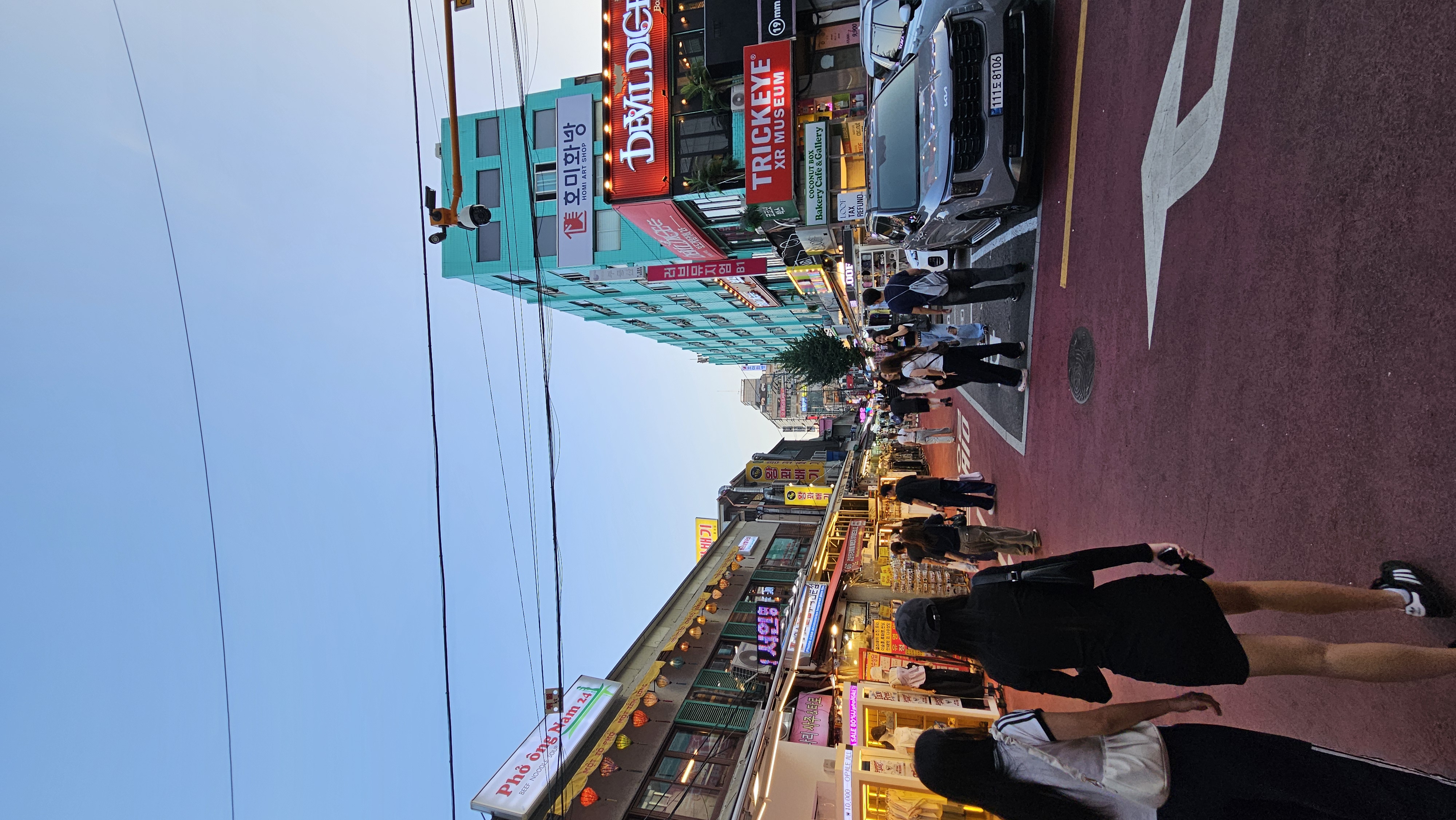
Link to this sectionThis is an original planning framework with official-source examples, prepared using AI-assisted drafting and source review on 20 September 2026 after 07:00 KST. No personal visit, operator interview or test booking is claimed. The photograph illustrates a Hongdae street and is not evidence of holiday trading. No paid or sponsored placement influenced the examples.
The cited operator notices and KTO guidance support the limited factual examples, not a citywide guarantee of availability. Some venue pages could not be retrieved during research, so no opening claim was made for them. Recheck changeable details for your own date and use the site's correction route if a cited notice changes. A source-check date records the review, not live availability.
Quick answers
Frequently asked questions
- Does Seoul nightlife close for the whole Chuseok holiday?
- Do not assume a citywide closure or citywide opening. Check the exact venue, branch, date and service. This guide does not certify any bar's holiday hours.
- Is a map's opening-hours label enough to plan a holiday visit?
- Use it as a starting point, then read a dated official notice and clarify conflicts with the operator. Normal hours alone do not resolve a holiday exception.
- Does a holiday event mean the venue is open every day of the holiday?
- No. The National Museum of Korea's 2026 notice lists holiday performances while excluding 25 September. Read each event date rather than only the holiday-period heading.
- Should I assume trains run later during the holiday?
- No. Check your exact operator, date, direction and connection. A general reference to possible extended services is not a timetable for your return journey.
Source desk
Official sources checked for this guide
Programme, admission and transport details can change. Recheck the linked official source on the day you go.
- 2026 Chuseok Holiday Travel GuideKorea Tourism Organization · Holiday-specific operating checks, museum closure cross-check and caution about service-specific transport. · checked 2026-09-20
- 2026 Chuseok visitor information for JongmyoKorea Heritage Service · Royal Palaces and Tombs Center · Exact dates, opening and entry cutoff, and differing guided-tour service. · checked 2026-09-20
- National museums' 2026 Chuseok cultural programmeNational Museum of Korea · 25 September closure and event dates that exclude Chuseok Day; factual summary only, no reuse of images or promotional copy. · checked 2026-09-20